
CAPITAL CREATOR





How to Create and Stick to a Budget: A Practical Guide
Do you need to create or improve your budget? Follow this quick guide to gain control over your finances and pave the way for financial success.
Managing your finances effectively is like navigating a ship—you need a reliable compass to steer you toward your financial goals. That compass is a well-structured budget. Whether you’re just starting out or looking to improve your existing budgeting skills, this comprehensive guide will equip you with the essential knowledge to create and stick to a budget.
Why Budgeting Matters
Before we dive into the specifics, let’s understand why budgeting is crucial:
1. Financial Clarity: A budget provides a clear snapshot of your income, expenses, and financial priorities. It’s like turning on the lights in a dark room—you can see where your money is going.
2. Goal Achievement: Your dreams—whether it’s buying a home, traveling, or retiring comfortably—all start with a budget. Without one, your goals remain elusive.
3. Financial Security: Life is unpredictable. A budget acts as your financial safety net, ensuring you’re prepared for emergencies and unexpected expenses.
The Basics of Budgeting
1. Calculate Your Net Income
Start by determining your after-tax income. If you have automatic deductions (like retirement contributions), add those back in to get your true disposable income. Include any other income sources, such as side gigs.
2. List Your Expenses
Make a comprehensive list of your expenses. Categorize them into needs (like rent, groceries, and utilities) and wants (entertainment, dining out). Don’t forget savings and debt repayment.
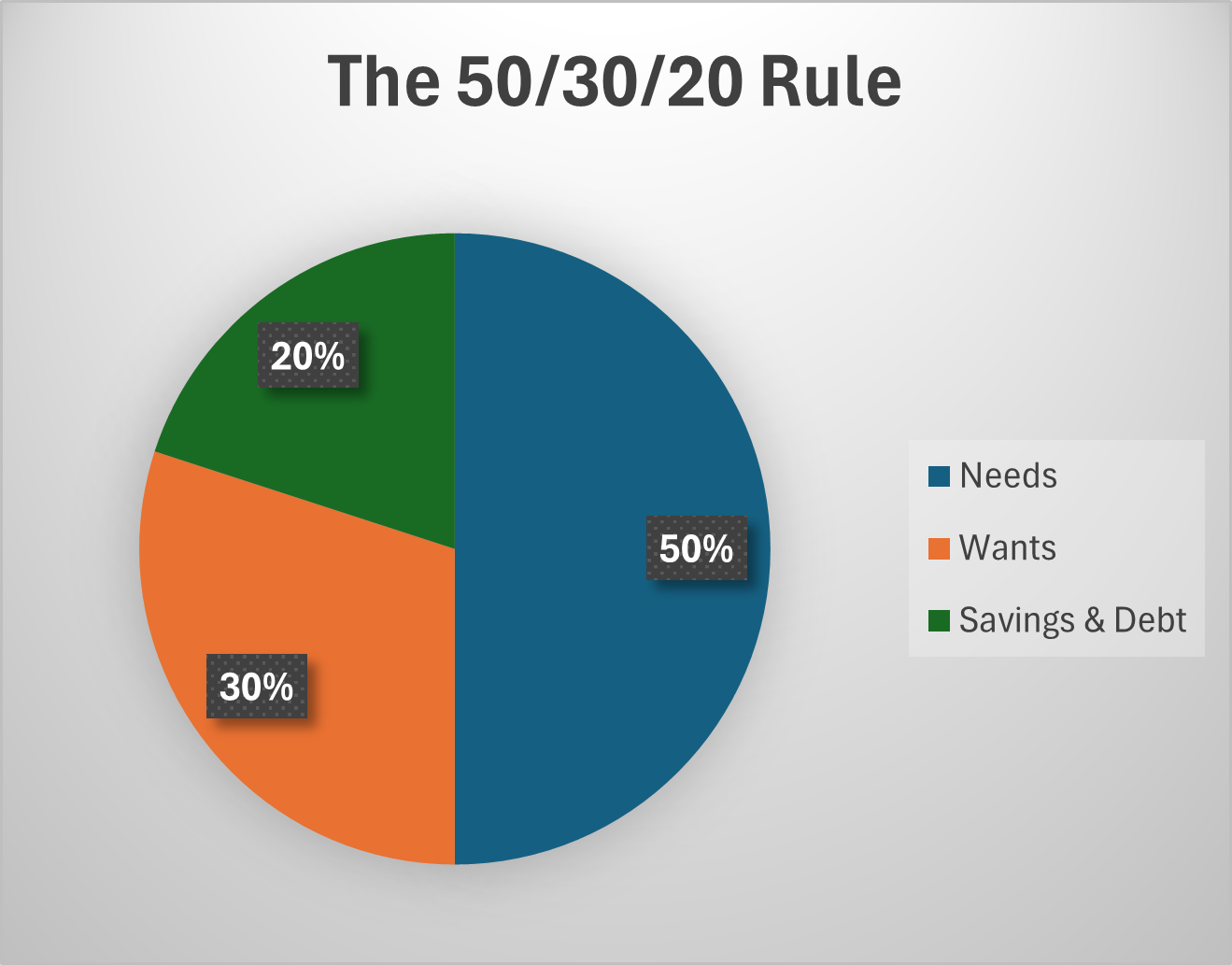
3. The 50/30/20 Rule
The 50/30/20 rule (see chart below) is a popular budgeting method that divides your monthly income into 3 categories. 50% of your income goes toward your needs, 30% of your income goes toward your wants, and 20% of your income goes toward savings and debt. I use a variation of this method with the percentages changed slightly to fit my lifestyle. There are many other budgeting methods, and they are not a one-size-fits-all. To see what method works best for you, get my free eBook titled "Methods of Budgeting" shown on the right side of this page.
4. Track Your Expenses
Use a paper or digital budget planner to monitor your spending. You should review your progress regularly and adjust as needed.
5. Plan Ahead
Budget before the month begins. Anticipate upcoming expenses and allocate accordingly.
6. Meal Planning
Plan your meals to avoid spending more than allocated on groceries and dining out. Don’t go grocery shopping hungry and stick to your list. I absolutely incorporate meal planning to help me stick to my list and avoid overspending.
7. Think Weekly
Break down your budget into weekly sections. It’s easier to manage by the week.
Common Budgeting Mistakes to Avoid
1. Not Creating a Budget: Two-thirds of Americans don’t create an extensive budget. Not keeping track of your money is dangerous. Luckily, creating your own budget is easier than ever with free tools and advice.
2. Setting Unrealistic Goals: Be ambitious but realistic. Challenge yourself, but stay practical when setting up each budget line.
3. Ignoring Tracking Efforts: Regularly record your spending or use online budgeting tools. Automation helps too.
4. Not Automating Savings: Set up automatic transfers to your savings account. Out of sight, out of mind.
5. Neglecting Regular Budget Reviews: Life changes, so actively manage your budget by revisiting it regularly.
Conclusion
We’ve covered simplified budgeting basics by emphasizing practical steps to create and maintain a budget. By following these guidelines, you’ll gain control over your finances and pave the way for financial success. Remember, your budget isn’t a slow cooker—it needs your active involvement. Keep it real, stay disciplined, and enjoy the journey toward financial freedom.

Charles Noble
Hard working and just trying to live my best life. Here to teach you how to save money and make money online.


CAPITAL CREATOR
Legal
Created with © systeme.io